
What a wedding florist does
O*NET's task list for floral designers includes conferring with clients about price, type of arrangement and delivery, ordering flowers from wholesalers and growers, and decorating halls and churches for weddings. A wedding florist does all of it for each couple, usually months before the date.
Around the design sits a small business: answering inquiries, sending proposals, signing contracts, collecting deposits, ordering stems for the week, and delivering, installing and clearing on the day.
Step by step
Most wedding florists follow roughly this order. The first steps are about skill; the rest are about running weddings as a business.
Learn floral design
Work in a shop, take a class or join an apprenticeship. BLS says new designers learn on the job over a few months.
Assist on real weddings
Freelance for an established wedding florist: processing flowers, building centerpieces, installing on the day. You learn timing, transport and venue rules you cannot learn in class.
Build a portfolio
Photograph every piece you make, from friends' events to styled shoots, and keep its recipe: stems, supplies, time and price.
Learn to price from real costs
Use your wholesaler's stem prices, your supplies and your time. The 3x habit: flowers, supplies and labor, times 3, rounded up to the next $5.
Set up the business basics
Register the business, sort sales tax and insurance for your state, and write a contract that covers deposits, substitutions and cancellations.
Answer your first inquiry with a priced proposal
Reply quickly with a clear proposal: each piece, its quantity and price, the delivery and setup fees, and the total.
Sign the contract and take a deposit
Book the date only when the contract is signed and the retainer is paid; schedule the final payment before you order flowers.
Order, build, deliver and install
Order stems for the week from your recipes, build in the days before, and deliver, install and clear on the day.
How Fiory's AI agent prices your first wedding
Steps 6 to 8 are the business side of a wedding, and that is where Fiory's AI agent helps. Paste the couple's email and up to 20 inspiration photos into Fiory. The agent reads the date, venue, guest count, budget, colors and pieces; creates the client and the event; analyzes the photos for style, palette and flower types; picks arrangements from your library first; writes stem-by-stem recipes for new pieces; and prices everything from your own costs, fee presets and sales tax.
A new piece is priced at 3 times its flowers, supplies and labor, rounded up to the next $5, and marked as an estimate for you to check. A proposal uses about 1 AI credit, and the plan includes 20 credits a month. Nothing reaches the couple until you send it.
| Job | What the agent does | What stays your call |
|---|---|---|
| Proposal from an inquiry | Builds the event and a priced proposal from the pasted email and photos | Every piece, quantity and price before you send it |
| Recipes | Writes stem-by-stem recipes for new pieces from photos, matched to the flowers you stock | Your design choices and substitutions |
| Contract check | Flags placeholders, missing facts, amounts that disagree with the event, and the retainer | What the contract says and when you send it |
| Payments | Sets up a payment schedule from the event total with your usual retainer, and drafts reminders | Approving every request; payments go to your own Stripe account |
| Ordering | Prepares the week's work orders, recipes and a supplier report of stems and bunches across your events | What you order and from whom |
Pricing your first wedding: a worked example
The 3x habit: flowers, supplies and labor, times 3, rounded up to the next $5. Here is a small wedding worked through. These are example numbers; use your own stem costs and labor rate.
| Piece | Flowers and supplies + labor | Price each | Line total |
|---|---|---|---|
| Bridal bouquet | $60 + $25 | $255 | $255 |
| Centerpiece × 10 | $30 + $10 | $120 | $1,200 |
| Boutonniere × 6 | $4 + $3 | $25 | $150 |
| Total | $1,605 |
Pricing tips from working wedding florists
The Society of American Florists' Floral Management magazine has interviewed event florists about how they protect their margins. A few habits worth copying from the start:
- Charge for delivery, setup and breakdown as their own fees
- Build foam, cages, moss and other supplies into every price
- Some florists add a 5 to 10% fee to cover consultations and proposals
- Sell by color and style rather than promising exact blooms, so you can substitute when prices jump
- Set a minimum: one florist raised her full-service wedding minimum to $3,500 and offered an à la carte menu for smaller weddings
- Keep rental inventory small at first; storage costs money
Seasons, deposits and cash flow
SAF describes the challenge of keeping cash flow steady when much of the year's revenue arrives around a handful of holidays, and wedding work clusters in season. In its 2026 outlook, one wedding florist said: "I'm looking at the invoices for current weddings and praying that I charged enough."
Deposits fix most of this. Take a retainer at booking and schedule the final payment before you order flowers, so you never pay the wholesaler with your own money.
Weddings in numbers
The Knot's 2026 Real Weddings Study, a survey of 10,474 U.S. couples married in 2025, puts the average wedding at $34,000 with 117 guests and 13 vendors hired.
Florists using Fiory
Proof it works: a luxury wedding studio on Fiory
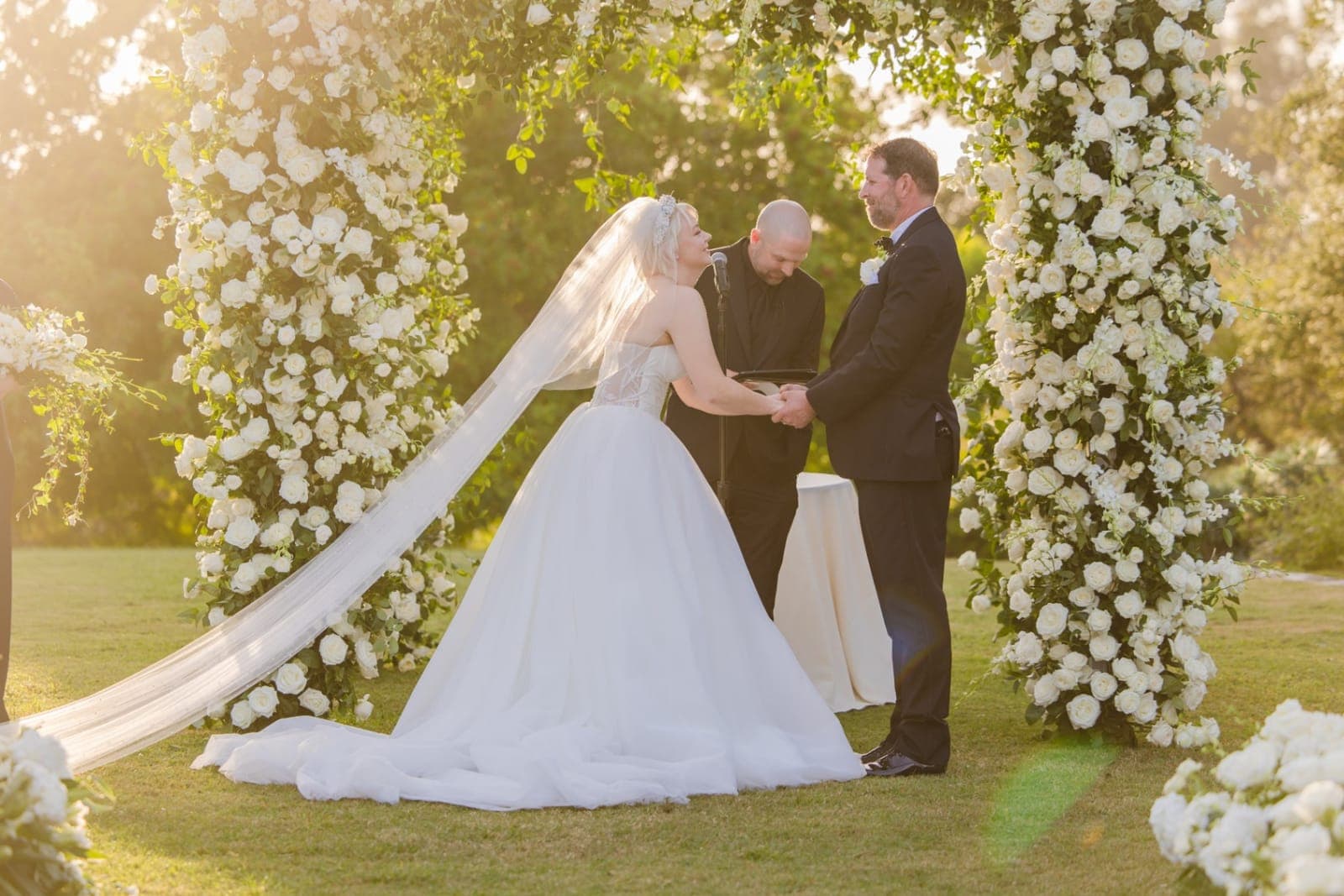
CHIC Flowers is a luxury wedding florist in San Diego and Los Angeles, featured in Vogue, Brides and Haute Living. It uses Fiory, including the AI agent, and its Fiory-built website organizes the portfolio venue by venue. Its main site, chicflowers.com, grew from a five-page portfolio to more than 150 pages, including 40 venue pages.
It also teaches the path this page describes. Chic Academy is its online school for retail florists ready to break into weddings, covering consultations, pricing and execution, taught by a working wedding florist.
- pages on chicflowers.com
- 150+
- venue pages
- 40
- featured in
- Vogue, Brides, Haute Living
chicflowers.com ↗Its Fiory website ↗Chic Academy ↗Read the case study →More florist sites built with Fiory →
Full disclosure: CHIC Flowers is the studio of Fiory's founder.
Start your floral journey with Fiory
You do not need software to learn floristry. You need good pricing habits from the start, and a system the day people start paying you. Here is what Fiory gives you at each stage.
1. While you learn
18 free florist calculators
Price a bridal bouquet, a centerpiece or a ceremony arch from wholesale stem costs, labor and markup. Free, in your browser. Practise on real numbers before anyone pays you.
Open the calculators →2. While you learn
Lens: price any arrangement photo
Upload a photo of an arrangement. Lens names the flowers, counts the stems and works out wholesale cost, labor, markup and a retail price. Free.
Try Lens →3. Your first paid wedding
The AI agent prices it from your numbers
Paste a couple's email and their inspiration photos into Fiory. The AI agent creates the client and the event, picks pieces from your library, writes stem-by-stem recipes for new ones and prices everything from your own costs, labor and tax. A new piece is priced at 3 times its flowers, supplies and labor, rounded up to the next $5, and marked for you to review. Nothing reaches the couple until you send it.
See how the AI agent works →4. When you open your studio
Proposal, contract, payments and website in one plan
Send the proposal, have the contract signed online, take deposits into your own Stripe account and publish a florist website on your own domain. One plan, $138 a month after a 14-day free trial, with 20 AI credits a month.
Start the 14-day free trial ↗
Questions people ask
Floral design itself needs no license or certification; BLS lists a high school diploma and on-the-job training as the typical route. Business registration, sales tax and insurance rules depend on your state and city.
Price each piece from your real costs: flowers and supplies at wholesale, plus your labor, times a markup. The 3x habit: flowers, supplies and labor, times 3, rounded up to the next $5. Then add delivery, setup and breakdown fees.
Start with your network and the vendors you assisted: planners, venues and photographers refer florists they trust. Make it easy to say yes: a clear portfolio, a quick reply and a professional, priced proposal.
No. It builds the event and the priced proposal inside your account. You review every piece and price, and nothing goes to the couple until you send it.
One plan, $138 a month after a 14-day free trial, with the AI agent, proposals, contracts signed online, payments to your own Stripe account and a florist website. The calculators and Lens are free without a plan.
Sources, checked November 2026
Wages, program details and certification rules change. Check the source before you enroll, apply or pay a fee.
- O*NET OnLine: Floral Designers, 27-1023.00
- U.S. Bureau of Labor Statistics, Occupational Outlook Handbook: Floral Designers (pay May 2025; projections 2025–35)
- BLS Occupational Outlook Handbook: How to Become a Floral Designer
- The Knot Worldwide: 2026 Real Weddings Study (couples married in 2025)
- SAF: Practical answers for an uncertain business climate (August 2026)
- SAF Floral Management: how savvy event florists stay profitable (May 2022)
- SAF Floral Management: boost wedding margins with these 8 rules (May 2025)
- SAF Floral Management: wedding work, double down or scale back? (May 2022)